
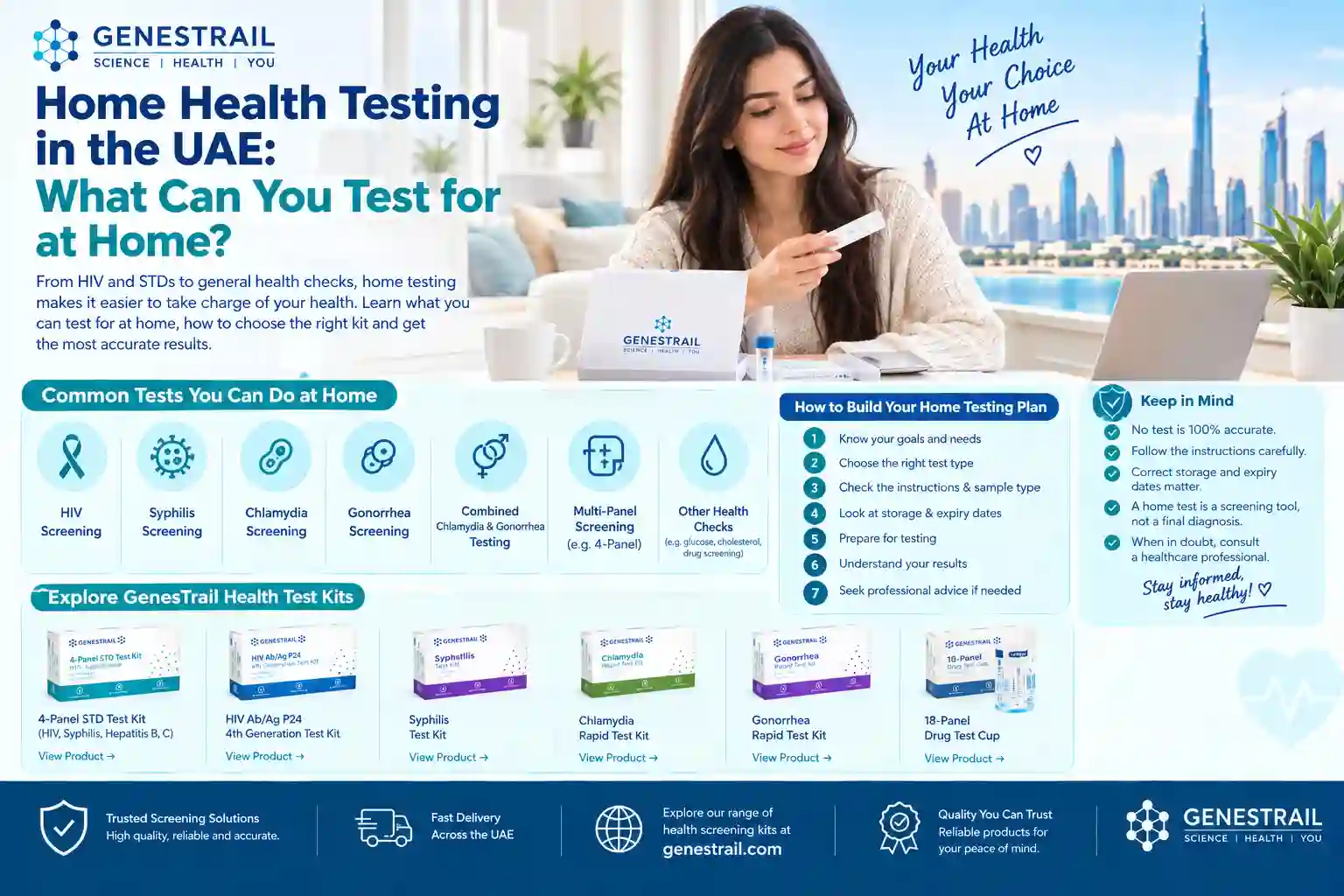
Home health testing has become a convenient option for people who want to take a more active role in monitoring their health. For UAE residents, home testing can offer privacy, convenience and flexibility when used correctly and for the appropriate purpose.
But what exactly can you test for at home?
The answer depends on the type of test, the sample required, the manufacturer's instructions and the intended use of the product. Some home tests are designed for preliminary screening, while others may help monitor specific health measurements.
In this guide, we explore common categories of home health testing available to consumers and explain what to consider before choosing a test kit.
What Is Home Health Testing?
Home health testing refers to tests that allow an individual to collect a sample and perform a screening test in a home or private setting.
Depending on the product, the sample may be blood, urine, saliva or another type of specimen. Some tests provide a result within minutes, while other self-collection kits require the sample to be sent to a laboratory.
Home testing can be useful for convenience and privacy, but it should not automatically be considered a replacement for professional healthcare. The purpose and limitations of each test should always be understood before use.
What Can You Test for at Home?
There are several categories of home health testing that consumers may encounter. The exact tests available can vary by product, intended use and local requirements.
1. HIV Screening
HIV screening is one category where self-testing options are available in some markets.
For example, an HIV antibody or antigen/antibody test may be designed to detect markers associated with HIV. The type of test matters because different tests have different detection windows.
GenesTrail offers an HIV Ab/Ag P24 4th Generation Test Kit for users looking for an individual HIV screening option:
HIV Ab/Ag P24 4th Generation Test Kit:
GenesTrail HIV Ab/Ag P24 4th Generation Test Kit
For HIV testing, carefully follow the manufacturer's instructions and pay attention to the timing of testing. A negative result can be affected by the window period, meaning a test performed too soon after an exposure may not detect an infection.
A reactive HIV self-test should be followed by appropriate laboratory testing or professional evaluation for confirmation.
2. Syphilis Screening
Syphilis is another condition for which screening tests may be available in self-testing or self-collection formats, depending on the product and market.
A home screening kit may provide a convenient preliminary testing option, but users should understand exactly what the test detects and what a result means.
GenesTrail's Syphilis Test Kit can be considered when looking for an individual screening product:
Syphilis Test Kit:
GenesTrail Syphilis Test Kit
If a result is reactive, professional evaluation and appropriate follow-up testing may be required.
3. Chlamydia Screening
Chlamydia testing may involve urine or swab samples depending on the test method. Some home testing approaches involve self-collection followed by laboratory analysis, while other products are designed for rapid screening.
GenesTrail provides a Chlamydia Rapid Test Kit as an individual testing option:
Chlamydia Rapid Test Kit:
GenesTrail Chlamydia Rapid Test Kit
Because testing requirements can differ based on symptoms, exposure, age, sex and the type of sample collected, choosing an appropriate testing method is important.
4. Gonorrhea Screening
Gonorrhea is another infection for which testing may be available through self-testing or self-collection approaches, depending on the test.
GenesTrail's Gonorrhea Rapid Test Kit provides an individual screening option:
Gonorrhea Rapid Test Kit:
GenesTrail Gonorrhea Rapid Test Kit
It is important to remember that testing should be selected according to the intended use of the product. If symptoms are present or there is concern about a possible infection, professional medical advice can help determine which type of test is appropriate.
5. Combined Chlamydia and Gonorrhea Screening
For people who want to consider more than one screening target, combined test kits can provide a multi-target approach.
GenesTrail offers a Gonorrhea & Chlamydia Combined Rapid Test Kit, which combines these two screening targets in one product:
Gonorrhea & Chlamydia Combined Rapid Test Kit:
GenesTrail Combined Test Kit
Combined testing may be convenient when more than one screening target is relevant. However, users should always check exactly what the product is designed to detect and follow the included instructions.
6. Multi-Panel Screening
Another option is a multi-panel test kit that covers several screening targets in one package.
For example, the GenesTrail 4-Panel STD Test Kit includes screening targets for HIV, syphilis, hepatitis B and hepatitis C:
4-Panel Test Kit:
GenesTrail 4-Panel Test Kit
A multi-panel option may be useful for someone looking for a broader screening approach rather than purchasing several individual products.
However, a larger number of test targets does not automatically mean that a particular kit is suitable for everyone. The selection should be based on the individual's screening needs and the intended use of the product.
Other Types of Home Health Testing
Home testing is not limited to infectious-disease screening.
Depending on the market and product, home-use tests can also cover areas such as:
Blood glucose monitoring
Pregnancy testing
Cholesterol testing
Certain hepatitis screening
Drug screening
Other specific health measurements
For example, FDA information describes home-use testing for conditions such as cholesterol and hepatitis, as well as glucose monitoring.
GenesTrail also offers an 18-Panel Drug Test Cup for users looking for a multi-panel urine screening product:
GenesTrail 18-Panel Drug Test Cup — product link
Different categories of tests have different limitations, so the product instructions should always be reviewed before testing.
Individual vs. Multi-Panel Home Testing
One of the biggest decisions when choosing a home health test is whether to use an individual test or a combined/multi-panel option.
Individual Test Kits
An individual test kit focuses on a particular screening target.
This can make sense when:
You are specifically interested in one test.
You already know which screening area you want to check.
You prefer a focused testing approach.
You want to repeat a specific type of screening when appropriate.
Combined or Multi-Panel Kits
A combined or multi-panel kit covers more than one screening target.
This may be useful when:
You want to consider several screening areas.
You prefer fewer separate products.
You are building a broader personal screening plan.
The included screening targets match your needs.
The important point is to choose based on the purpose of testing rather than simply choosing the kit with the largest number of panels.
What Should You Check Before Buying a Home Test Kit?
Before purchasing a home health test kit in the UAE, review several important details.
Check the Intended Use
Start by understanding what the test is designed to detect.
The product name alone may not provide enough information. Read the product description and instructions to understand the intended purpose.
Check the Sample Type
Different tests can require different types of samples.
Depending on the product, this may include:
Finger-prick blood
Urine
Oral fluid
Swab samples
Other specimen types
Make sure you understand the collection process before starting.
Check the Instructions
Instructions are an essential part of home testing.
Review:
Sample collection requirements
Required sample quantity
Testing procedure
Timing
Result interpretation
Storage conditions
Expiry information
What to do with an invalid or reactive result
FDA guidance specifically recommends reading instructions carefully and checking expiration dates and storage conditions before performing a home test.
Check Storage Requirements
Home test kits can be affected by unsuitable storage conditions.
Follow the manufacturer's stated storage requirements and avoid storing kits in inappropriate locations such as areas exposed to excessive heat, direct sunlight or moisture.
This consideration is particularly relevant when purchasing or storing test kits in a warm climate.
Check the Expiry Date
Always check the expiration date before using a test.
Do not assume an unused kit will remain suitable indefinitely. The components of a test can have specific stability requirements.
How to Get Better Results From Home Testing
Correct use is one of the most important parts of home testing.
A simple process can help reduce avoidable errors:
Read the instructions before opening or using the test.
Check the expiry date.
Confirm the kit has been stored correctly.
Prepare the required materials.
Collect the sample exactly as instructed.
Use the correct amount of sample.
Follow the specified timing.
Read the result within the recommended time.
Record the result if useful for your personal health records.
Follow up appropriately if the result is reactive, unclear or invalid.
Incorrect sample collection, improper storage or incorrect interpretation can affect test performance.
What Does a Negative Result Mean?
A negative or non-reactive result generally means the test did not detect the target according to the test's stated method and conditions.
However, a negative result does not always rule out a condition.
Timing can matter. For example, HIV tests have different window periods depending on the type of test, and testing too early can produce a negative result even when infection is present.
If you have ongoing concerns, symptoms or a recent possible exposure, speak with a qualified healthcare professional about whether additional testing is appropriate.
What Does a Reactive or Positive Result Mean?
A reactive or positive screening result should generally be treated as a result that requires appropriate follow-up rather than as a final diagnosis.
The next step depends on the specific test.
For HIV self-testing, CDC guidance states that a positive self-test should be followed by laboratory testing to confirm the result.
For other screening tests, follow the manufacturer's instructions and seek professional advice when recommended.
What If the Result Is Invalid?
An invalid result generally means the test did not work as expected or the required control indicator was not present.
Possible reasons can include:
Incorrect procedure
Insufficient sample
Incorrect timing
Damaged test components
Improper storage
Expired product
Do not interpret an invalid result as positive or negative. Check the instructions to determine whether the test should be repeated using a new kit.
Home Testing Is a Screening Tool
One of the most important things to understand about home health testing is the difference between screening and diagnosis.
A screening test is generally an initial assessment. It may indicate whether further evaluation is appropriate, but it may not provide a definitive diagnosis.
FDA guidance explains that screening tests can indicate that additional testing or medical evaluation may be needed.
This is why home testing should be considered part of a broader approach to health rather than the only source of medical information.
When Should You Consider Professional Testing?
Consider speaking with a healthcare professional when:
You have symptoms.
You have concerns about a recent possible exposure.
A home screening result is reactive or positive.
Your result is invalid repeatedly.
Your result does not match your symptoms or concerns.
You are unsure which test is appropriate.
You need confirmatory testing.
You need treatment or medical advice.
CDC recommends discussing STI testing needs with a healthcare provider because the appropriate tests can depend on factors such as age, location, sexual history, current practices and symptoms.
Choosing the Right Home Health Test in the UAE
There is no single home test kit that is appropriate for everyone.
A practical approach is to ask yourself:
What am I trying to screen for?
Then consider:
Do I need one individual test or several screening targets?
Next:
What sample does the test require?
And finally:
Do I understand the instructions, timing, storage requirements and follow-up process?
For UAE customers, GenesTrail provides a range of individual and multi-panel health screening products that can be explored according to the intended testing purpose.
You can explore the complete range of products through the GenesTrail website.
A Simple Home Testing Checklist
Before using a home health test kit, remember:
Choose the correct test.
Check the intended use.
Check the expiry date.
Review storage requirements.
Read the instructions completely.
Prepare the sample correctly.
Follow the timing instructions.
Interpret the result exactly as instructed.
Do not treat a screening result as a diagnosis.
Seek appropriate follow-up when necessary.
Frequently Asked Questions
What health tests can you do at home in the UAE?
Depending on the product and its intended use, home testing can include areas such as HIV, syphilis, chlamydia, gonorrhea, hepatitis screening, glucose monitoring, pregnancy testing and other health measurements.
Are home health tests reliable?
Home test performance depends on the specific product, its intended use and how correctly it is used. No test is perfect, and incorrect storage, sample collection or interpretation can affect results.
Can I test for more than one condition at home?
Yes, some products are designed as combined or multi-panel tests. Always check exactly which targets are included in the specific product.
What should I do if my home test is positive?
Follow the product instructions and seek appropriate professional follow-up. Some reactive screening results require confirmatory laboratory testing.
Can I use a home test instead of visiting a doctor?
Home testing can provide useful screening information, but it should not replace appropriate healthcare visits, especially when you have symptoms, concerns or a result that requires confirmation.
Final Thoughts
Home health testing can make certain types of screening more convenient and private for UAE residents. From individual screening products to combined and multi-panel kits, there are different options depending on what you want to check.
The most important step is choosing a test for the correct purpose and using it exactly according to the manufacturer's instructions.
Whether you choose an individual HIV, syphilis, chlamydia or gonorrhea test, a combined option, or a broader multi-panel kit, remember that a home screening result is one part of your overall health picture.
Use home testing responsibly, understand the limitations of the test and seek professional healthcare advice when appropriate.
Medical Disclaimer: This article is for general educational purposes and is not a substitute for professional medical advice, diagnosis or treatment. Always follow the instructions supplied with your specific test kit and consult a qualified healthcare professional when you have symptoms, concerns or a result requiring follow-up.
GenesTrail website:
GenesTrail