
Concern about potential HIV exposure often leads to anxiety and a desire for immediate answers. In the UAE, where privacy is paramount, many individuals seek the discretion of home testing. However, the most critical element of accurate testing isn’t just the type of test, but when you take it.
The biggest mistake people make is testing too soon. If you test before your body has produced detectable markers, you will receive a "false negative."
Here is everything you need to know about HIV testing window periods.
What Exactly is the "Window Period"?
The HIV window period is the time between potential exposure to the virus and when a test can accurately detect infection. During this time, the virus is replicating, but your body hasn’t produced enough antigens or antibodies to trigger a reactive result.
The length of the window period depends entirely on the type of test technology you use.
Breakdown by Test Type (Genestrail Kits)
Not all HIV tests work the same way. Understanding the technology helps you determine if it is too early to test.
1. The Shortest Window: 4th Generation Tests (p24 Antigen)
The gold standard for early detection is the 4th Generation HIV Ab/Ag P24 Test Kit.
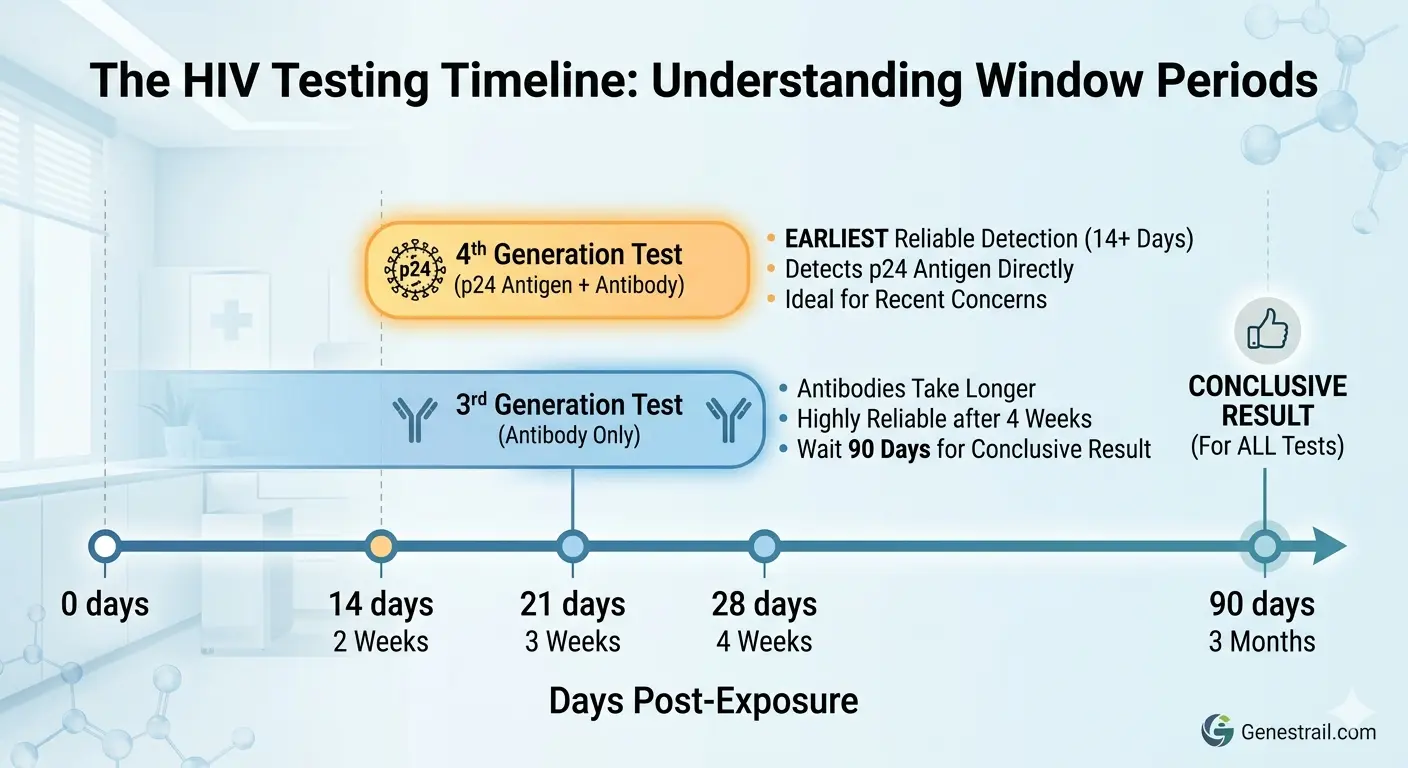
When to Test: You can reliably test with a 4th Gen kit as early as 2 weeks (14 days) after exposure. While highly accurate at this stage, it is clinically recommended to confirm again later.
Window Period: 14 to 45 days.
How it Works: It detects both HIV antibodies (your body’s response) and the p24 antigen (a protein on the surface of the virus itself). The p24 antigen appears much earlier than antibodies.
When to Test: You can reliably test with a 4th Gen kit as early as 2 weeks (14 days) after exposure. While highly accurate at this stage, it is clinically recommended to confirm again later
Window Period: 14 to 45 days.
2. The Traditional Window: 3rd Generation Tests (Antibodies Only)
If you have already passed the acute infection phase (3+ months post-exposure), a standard test like the HIV 1/2 Rapid Test Kit is highly effective and reliable.
When to Test: While antibodies can begin appearing after 3 weeks, it takes up to 90 days (3 months) for 99.9% of infected individuals to produce detectable antibody levels. Testing before this 90-day mark with an antibody-only test carries a higher risk of a false negative.
Window Period: 21 to 90 days.
How it Works: It detects only the antibodies your immune system produces.
Comprehensive Panels for Maximum Peace of Mind
For residents in Dubai, Abu Dhabi, and Sharjah who are concerned about exposure but aren’t sure what to test for, a comprehensive panel is often the best choice.
Our 4-Panel STD Test Kit covers HIV, Syphilis, and Hepatitis B/C. The HIV component uses the reliable antibody screening (3rd generation). Therefore, this panel should be used 90 days after potential exposure for maximum accuracy regarding the HIV status.
When is Testing Considered Conclusive?
While 4th Generation tests provide answers early (at 14–20 days), the clinical community adheres to standard guidelines for "conclusive" results to eliminate all risk.
A result at 90 days (3 months) post-exposure, regardless of the test type, is considered clinically conclusive for HIV-1 and HIV-2.
A result from a 4th Gen Ab/Ag lab test or high-quality rapid kit is considered >95% accurate after 4 weeks.
Summary Checklist
If you are worried about exposure:
Knowing your status early is vital for health and for protecting partners, but waiting for the proper window period ensures you get the correct status.
After 90 Days: Any Genestrail HIV screening kit will provide a definitive, conclusive answer.
Day 14–Day 45: Use the 4th Generation p24 Antigen test kit.
Days 0–14: It is too early to test. Results will not be accurate.
Medical Disclaimer: This blog is for informational purposes only. A reactive (positive) result on any rapid home test in the UAE must be confirmed by a secondary, laboratory-based blood test and professional medical consultation.
